 HOA Law Blog
Did you Know?
By Leena Danpour, Esq.
The 28-day membership comment period is not required for all proposed rule changes. Yes, you heard it here.



Did you Know?
By Leena Danpour, Esq.
The 28-day membership comment period is not required for all proposed rule changes. Yes, you heard it here.
As many condominium association boards know, hard surface flooring is a popular trend and homeowner demands for its installation are increasing. Benefits of hard surface flooring include its hypoallergenic properties and its durability, and some homeowners simply prefer its aesthetics. In view of this, associations need to consider the following important factors when dealing with hard surface flooring requests or issues.
1. What Do the Governing Documents State? First and foremost, association boards need to review and be familiar with their CC&Rs provisions related to hard surface flooring. Review the architectural section to determine whether hard surface flooring is even subject to architectural review and approval. For example, some CC&Rs allow an owner to install improvements such as hard surface flooring inside the airspace of a unit as long as the common area structural components are unaffected. If the CC&Rs do not subject hard surface flooring to architectural review, then an owner may proceed with installation (subject to the provision referenced in Item 3, Nuisance, below*). Associations should also review the prohibited use section of the CC&Rs. Sometimes this section prohibits hard surface flooring entirely and sometimes only in certain circumstances (e.g., it is permitted for homes located on the first floor but not for upper floors of a building). The rules and regulations of an association should be consistent with the authority granted by the CC&Rs. If the CC&Rs do not enable an association to regulate hard surface flooring, then it can only do so through the enforcement of a nuisance provision (see Item 3, Nuisance, below*). An association may be successfully challenged in court if it imposes standards beyond the authority granted by the CC&Rs.
2. Establish Consistent Flooring Standards. Putting members on notice of hard surface flooring standards is key to minimizing future architectural and nuisance disputes. Such standards allow owners to plan ahead and avoid costly mistakes. This also allows the association to act consistently and avoid claims of selective enforcement or special treatment in regard to architectural applications or owner violations. These standards should be in either the CC&Rs of an association or its rules and regulations, such as the architectural guidelines section.
 Please catch Sandra L. Gottlieb’s article Dealing with Assistance Animals regarding processing reasonable accommodation requests for assistance animals featured in the CACM Fall Law Journal. In the article, Sandra discusses different types of requests, animal rules, and planning for accommodations. To read the full article, click here.
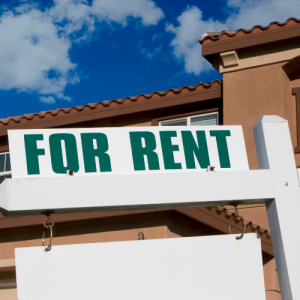
We have bad news. Despite a lot of lobbying work, the legislature passed, and the Governor signed into law Assembly Bill 3182 (“AB 3182”), which amends Civil Code section 4740 and adds a new section 4741 to the Civil Code. Pursuant to the new section 4741, an owner of a condo, home, lot, or unit in a co-op (a “Separate Interest”) that is part of a common interest development (“CID”) cannot be required to comply with a provision of the CC&Rs, Bylaws or Rules that prohibits or unreasonably restricts the renting or leasing of a Separate Interest, accessory dwelling units (“ADUs”), or junior accessory dwelling unit (“JADUs”) to a renter, tenant or lessee.
The good news is that section 4741 will allow CIDs to adopt or enforce governing document provisions that prohibit transient occupancy or short-term rentals of Separate Interests for thirty (30) days or less.
That was the good news; short and not so sweet. The other bad news is that Section 4741 explicitly prohibits CIDs from:
By David Swedelson, Partner at SwedelsonGottlieb, Community Association Attorneys
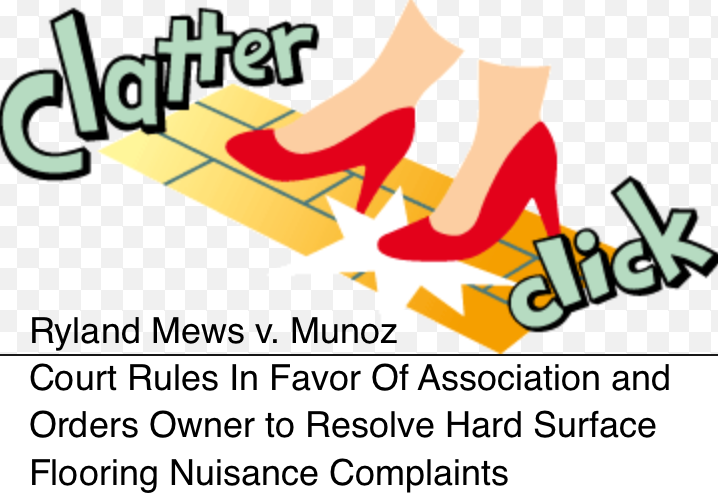
Many homeowners want hard surface flooring instead of carpet. And they will often present a prescription from their doctor for a hard wood floor in an effort to get around their association’s restrictions or prohibitions on hard surface flooring. Yes, a prescription for a hard wood floor on a doctor’s prescription form. But anyone that works with condos knows that hard surface flooring may create nuisance problems for the downstairs neighbor. And when the downstairs neighbor complains to the board about the hard surface floor that was not approved and violates the CC&Rs, the board is sometimes reluctant to take legal action thinking that a court is not going to rule in its favor. The California Court of Appeal debunked that thinking in the case of Ryland Mews v. Munoz upholding a California condominium association’s ability to limit hard surface flooring in response to nuisance complaints.
The story in the Ryland Mews case is all too familiar. Munoz moved into their upstairs unit at Ryland Mews and replaced the carpets with hardwood floors allegedly to accommodate the wife’s severe dust allergy. And it was not to soon after that when the downstairs neighbors complained about the additional noise they were now hearing.
When the association’s manager wrote to Munoz regarding the complaints and the fact that the alteration of the flooring was made without prior approval of the association, Munoz did not respond within the 30 days Management had given them. Management wrote to Munoz again, this time requesting Alternative Dispute Resolution (ADR) under the Davis-Stirling Act. Munoz still did not respond to the Association’s Request for Resolution.
Continue reading
By David Swedelson, Senior Partner at SwedelsonGottlieb, Community Association Attorneys
 The City of Laguna Beach has for a long time had an ordinance that provided homeowners in that city some protection of their ocean and mountain views. According to a recent LA Times article, the City adopted a new view ordinance in 2014 that allows its residents “to use the date they purchased the home or Nov. 4, 2003, [the date used in the prior law] whichever is earlier, to establish a record of a view, usually through photographic evidence. Offending vegetation must be within 500 feet of the claimant’s property line and at least 6 feet tall to be subject to a claim.”
The city’s new ordinance requires a property owner claiming an obstructed view to first attempt to work out a solution with his or her neighbor on whose property the trees/vegetation are located before the city has to get involved. If the homeowners can’t reach an agreement to resolve the view issues, then the property owner pays $500 for a city-hired mediator to step in. This is a great idea and one that we have recommended to many of our clients. Mediation has proven to be a very effective tool for resolving owner-to-owner disputes such as view obstructions. According to the Times article, “[o]f the 25 view mediation applications (the city was expecting more, see below), a mediator resolved five cases while parties in two other cases worked out issues by themselves. Other cases are pending.”
Continue reading
By David Swedelson and Kevin McNiff, Community Association Attorneys at SwedelsonGottlieb
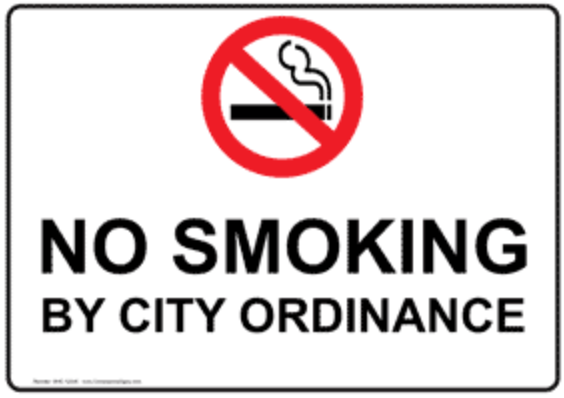
In August of 2014, we wrote about Culver City’s no-smoking ordinance that would affect common interest developments. The full text of the ordinance may be read through the city’s website here. We have recently received questions from concerned association managers and board members as to whether Culver City condo associations would be responsible for enforcing the ordinance. As the time nears for the smoking ban to go into effect, such questions and concerns will likely be more common for condo boards and managers who are affected. The short answer is yes, Culver City seems to have attempted to make the associations responsible for enforcing the City’s ban on smoking in buildings with multiple units, although it remains to be seen what level of enforcement will be required.
Continue reading
 Interesting article on restrictions on flying the American flag in Utah. Follow this link to read attorney Peter Harrison’s article that addresses this issue. His article references the great respect that many of us share for our flag and what it stands for. According to Harrison’s article, the Freedom to Display the Flag Act of 2005 (federal law) does not “completely override an HOA’s CC&Rs.”
Things are different here in California. Our Civil Code/Davis Stirling Act expressly prohibits California Community Associations from limiting or prohibiting the display of the flag of the United States on a member’s separate interest or within their exclusive use common area. Follow this link to read our Civil Code Section 4705. We in California do respect our Flag and what it stands for, and no California community association should restrict any owner from flying the flag so long as it meets the requirements of the Code.
David Swedelson is a senior partner at SwedelsonGottlieb, Community Association Attorneys
By David Swedelson, Partner at SwedelsonGottlieb, Community Association Attorneys
 If you thought that the laws in other states regarding condos and HOAs were the same as ours, you were way wrong. And that is certainly the case when it comes to fining and/or penalizing owners for violations. On July 1, 2015, new provisions which clarify the procedures in Florida for fining and use right suspensions for non-monetary violations became effective. An article by Florida community association attorney Jeffrey Rembaum describes this new law.
The term “non-monetary violations” refers to violations such as failing to pressure clean roofs (seriously?) and driveways, to remove dead trees, to bring in the garbage cans and to pick up after your pet, etc., and excludes penalties for delinquent payment of assessments.
According to Rembaum, “[t]hese new provisions were put into place to clarify the manner in which an association’s board of directors and its fining and suspensions committee coexist. Prior to these provisions, there were some who were unsure as to whether the fining and suspensions committee would first meet and then the board of directors would levy the fine, or if the board of directors would first meet, determine the amount of the fine, and then the fining committee would meet to provide the offending owner with the opportunity to be heard. Now, it is patently clear. The board must take action first.”
Continue reading
By David C. Swedelson, Esq. and Mark Petrie, Marketing Coordinator at SwedelsonGottlieb, Community Association Attorneys
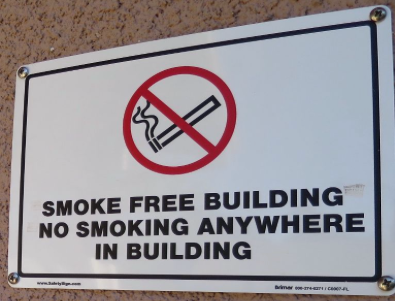 Complaints about secondhand smoke are increasing, and many associations are looking for options for dealing with the issue. Many boards want to propose an amendment to the association’s governing documents but are concerned about enforcement, as they know that there are some smokers living at their associations.
If your development is made up of several detached buildings, each of which contain multiple units, you may want to consider an innovative alternative – amending the governing documents to allow the owners of each individual building to self-determine that their building will be smoke free! We did this for one of our clients, setting up a process by which the owners of a building can unanimously apply to the board for designation as a permanently smoke-free building.