



 Blog Post by David Swedelson, SwedelsonGottlieb Community Association Attorneys
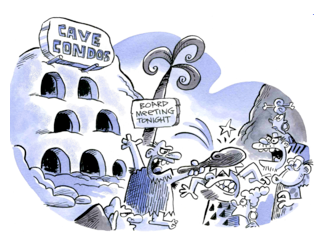
We are often asked whether persons who are not members of the association can attend association board meetings. The short answer to this question is yes, subject to the considerations discussed below. We are also asked if non-members can be excluded from board meetings; the answer is yes, and this is also subject to considerations that are addressed below.
California Corporations Code § 1363.05, known as the Common Interest Development Open Meeting Act, provides, at subsection (b), that any member of the association may attend meetings of the association’s oard of directors, except executive session meetings of the board. This statutory provision is silent as to whether non-owner residents of the association or other non-members can attend open/general session Board meetings. Further, most association’s bylaws do not prohibit non-members from attending board meetings, and are silent on this issue.
Continue reading
 Blog Post by David Swedelson, Partner SwedelsonGottlieb
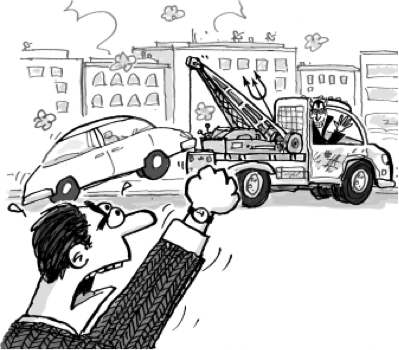 We are often asked if a California condominium or homeowners association has the authority to tow vehicles from the association if the vehicle is parked in violation of the association’s Rules and Regulations. The answer is that an association has the right and authority to tow vehicles, assuming that the Association has the proper signage posted in accordance with the California Vehicle Code, the towing is conducted in accordance with the California Vehicle Code, and the association’s Rules allow for same. Do you tow vehicles at your association? Are you considering adopting rules regarding towing? We have updated our information on towing vehicles at community associations and turned it into a printable article.
  The holidays are just around the corner, and it’s time for community association boards to start getting ready to address issues connected with holiday decorations. What kinds of limits should be placed on holiday decorations? How do you implement holiday rules and regulations? All that and more questions are answered in our article
  Apparently there are many of you out there that are not aware that as of January 2010, California community associations are permitted by law to distribute budget packages and most annual disclosure documents to owners electronically so long as owners give their written consent to receive them by email. Once that consent is obtained, budget distribution can become virtually paperless. To read the statute,
  Okay, it is Halloween. I have been representing condominium associations for 30 years and have never heard of one that is haunted, at least not with goblins and ghosts. But apparently there are some where residents have claimed to have seen ghosts.
  We have had to extricate several of our community association clients (and often their management as well) from claims or lawsuits relating to the federal Fair Debt Collections Practices Act (FDCPA). It is well settled law that the FDCPA applies to the collection of delinquent and unpaid assessments for condominium and homeowner associations. However, the FDCPA does not apply to collection efforts which a community association, the creditor, undertakes on its own to collect on a debt, nor does it apply to its agents whose collection activities are “incidental to a bona fide fiduciary obligation” or which concern a “debt which was not in default at the time it was obtained by such person.”