



By David Swedelson, Partner at SwedelsonGottlieb, Community Association Attorneys
 We often get calls from Board members and managers asking us to help them with noise problems. Usually, the complaints involve hard surface flooring, loud stereos or TVs, prolonged or loud dog barking, or a tenant who plays a musical instrument for several hours a day, especially on the weekend or in the evenings.
In China, which is apparently experiencing a condominium-building boom, they have a different kind of noise problem: public dancing to loud music. These aren’t raves; they’re daily occurrences. And the rowdy crowd isn’t twenty-something millennials. They’re grandmothers, women in their 50s and 60s, about 100 million of them. Even in China, this is not an inconsequential number. This was the subject of a recent article in the Wall Street Journal.
The dancing – whether it’s traditional, patriotic, or China’s version of rap or hip-hop, is a problem for people who choose to relax in quieter ways, and whose quiet enjoyment of their units is disturbed. Some paid extra for their units for the peace and quiet. Terms to buy a condo can be stiff in China. For example, in one complex, a $300,000 unit required 50% up front, and the balance within three years. These owners are arming themselves with decibel meters, and working to get laws passed to create “Quiet Zones”.
Continue reading
 Robin Williams is dead. We lost a great talent, a very funny man. As one commentator wrote, the world is a lot less funny today.
 New legislation amending two of the transfer disclosure sections of the Davis-Stirling Act, Sections 4528 and 4530, will be effective January 1, 2015.
  An article in the LA Times last week reported that Los Angeles City auditors revealed that the bureau charged with fixing and maintaining Los Angeles’ streets is plagued with problems that include failing to collect or spend hundreds of millions of dollars, keeping shoddy records and neglecting to address the most heavily trafficked roads first.
  Earlier this year, I attended a legislative action day in Sacramento. I was surprised by the number of bills being proposed to deal with the drought, with many of them focused on community associations. As the state of emergency with our water supply in California drags on, state and local governments continue to get more aggressive with addressing water use. They do not want us using all that much. And they do not care if an owner’s lawn turns brown.
  Have you seen SwedelsonGottlieb Senior Partner David Swedelson present his Playing by the Rules seminar yet? Be sure to catch his next offering of this popular program with co-presenter Craig Phillips on July 30, 2014 at 8:00 a.m. in Valencia. The program is free to HOA board members and managers who preregister.
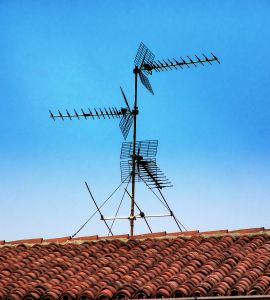 The National Chapter of Community Associations Institute (CAI) recently sent out the following urgent message, which we are reproducing here in its entirety. If you want to preserve the right for homeowner associations to be able to restrict the installation of radio towers and antennas, you need to read and act on this important information:
 Looking for a fun, healthy way to support a great cause? This Saturday, SwedelsonGottlieb staff will be teaming up with the Greater Los Angeles Chapter of Community Associations Institute in the American Cancer Society’s Relay for Life. Come on over to Santa Monica and join us this Saturday, July 26th at 10:00 a.m.
 We are often asked about what portions of an association’s CC&Rs and Bylaws need updating to reflect current state statute and best practices. The answer is usually simple – everything! Due to the reorganization of the Davis-Stirling Act effective January 1, 2014, which included many substantive changes, plus many other statutory changes that have occurred within the past 10 years, many associations’ governing documents have ceased to be reliable resources for effective governance and operation of an association. We are currently assisting many of the firm’s clients with complete amendment and restatement of their CC&Rs, Bylaws, Rules and Policies.
 Many boards of directors make enforcement decisions without considering all of the variables. We get contacted and told that an owner has violated the association’s CC&Rs. When we start asking questions, we find out that there have been similar violations in the past that the board has not dealt with. Or we find out that the violation is old news and the board failed to take timely action. Or that the violation was committed by a prior owner.