 HOA Law Blog


By the Community Association Attorneys at SwedelsonGottlieb
 Most associations have provided transfer disclosures/documents to an escrow at some point when an owner is selling his or her unit/home or property in a community association to a prospective purchaser. This task is usually completed by the association’s managing agent. Sections 4528 and 4530 of the Civil Code govern the requirements for complying with an Association’s escrow disclosure requirements. AB 2430, which amends Civil Code Sections 4528 and 4530 and is effective as of January 1, 2015, now provides some helpful points of clarification and one major affirmation of California case law.
First, AB 2430 now provides that it is the responsibility of a seller to compensate the association, person, or entity that provides the required documents to the prospective purchaser. This is the first time the Davis-Stirling Act has expressly made clear that the fees charged by an entity other than the association (e.g., management companies) are the responsibility of the seller. This change now makes the Civil Code on par with California case law. See our previous article to learn about the California cases which paved the way for this new legislation.
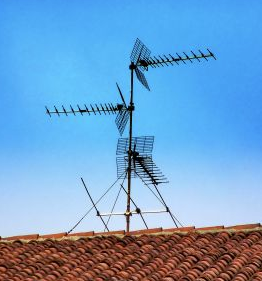 Growing up, there was a home in our neighborhood that had a massive radio antenna, much like the one in the photograph that is part of this blog post. As a kid, I was fascinated by the antenna. It was so big. Actually, I was captivated by the thought that I could talk to people around the world via a ham radio.
 Who said you can’t trust lawyers? You can certainly trust SwedelsonGottlieb, as we are actively opposing proposed new legislation that would make us more money, AB 1738. This bill concerning internal dispute resolution (IDR) in common interest developments (Civil Code Sections 5900-5920) was recently passed by the the California State Assembly and the Senate unopposed. It’s clear that the legislators do not understand the implications of what may happen if this legislation is signed into law by the Governor. If signed into law, this new law will most certainly make more work for us community association attorneys, as owners will be bringing their attorneys to IDR meetings, and many boards will opt to do the same.
  New legislation amending two of the transfer disclosure sections of the Davis-Stirling Act, Sections 4528 and 4530, will be effective January 1, 2015.
 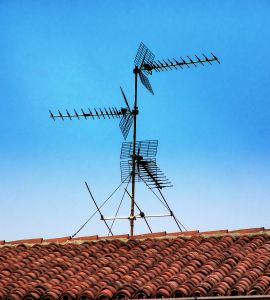 The National Chapter of Community Associations Institute (CAI) recently sent out the following urgent message, which we are reproducing here in its entirety. If you want to preserve the right for homeowner associations to be able to restrict the installation of radio towers and antennas, you need to read and act on this important information:
 In recent years, California has been faced with drought conditions, reduced water supplies and a consistently growing population. One step the California legislature has taken to address these issues was the adoption of Assembly Bill 1881, the Water Conservation in Landscaping Act of 2006 (the “Act”), which establishes goals for the efficiency and reduction of water usage in California. The Act has been codified in the following California statutory provisions: Section 4735 of the Civil Code; Article 10.8 (commencing with Section 65591) of Chapter 3 of Division 1 of Title 7 of the Government Code; Section 25401.9 of the Public Resources Code; and Article 4.5 (commencing with Section 535) to Chapter 8 of Division 1 of the Water Code, relating to water conservation.
 Is your condo association exclusively a commercial or industrial development? Surprise — as of January 1, 2014, the Davis-Stirling Act no longer applies to your association. Your association is now regulated by the new Commercial and Industrial Common Interest Development Act (CICIDA), Civil Code Sections 6500-6876.
 SB 298, which adds Section 53069.81 to the Government Code, is an unusual piece of legislation that provides community associations in one county of California with the ability to contract with local law enforcement agencies to provide Vehicle Code enforcement services at the association. We had not heard about this bill until now and do not know why it was limited to Orange County community associations as we know that associations in other parts of the State have a need for help with enforcement of the Vehicle Code on their private streets.